
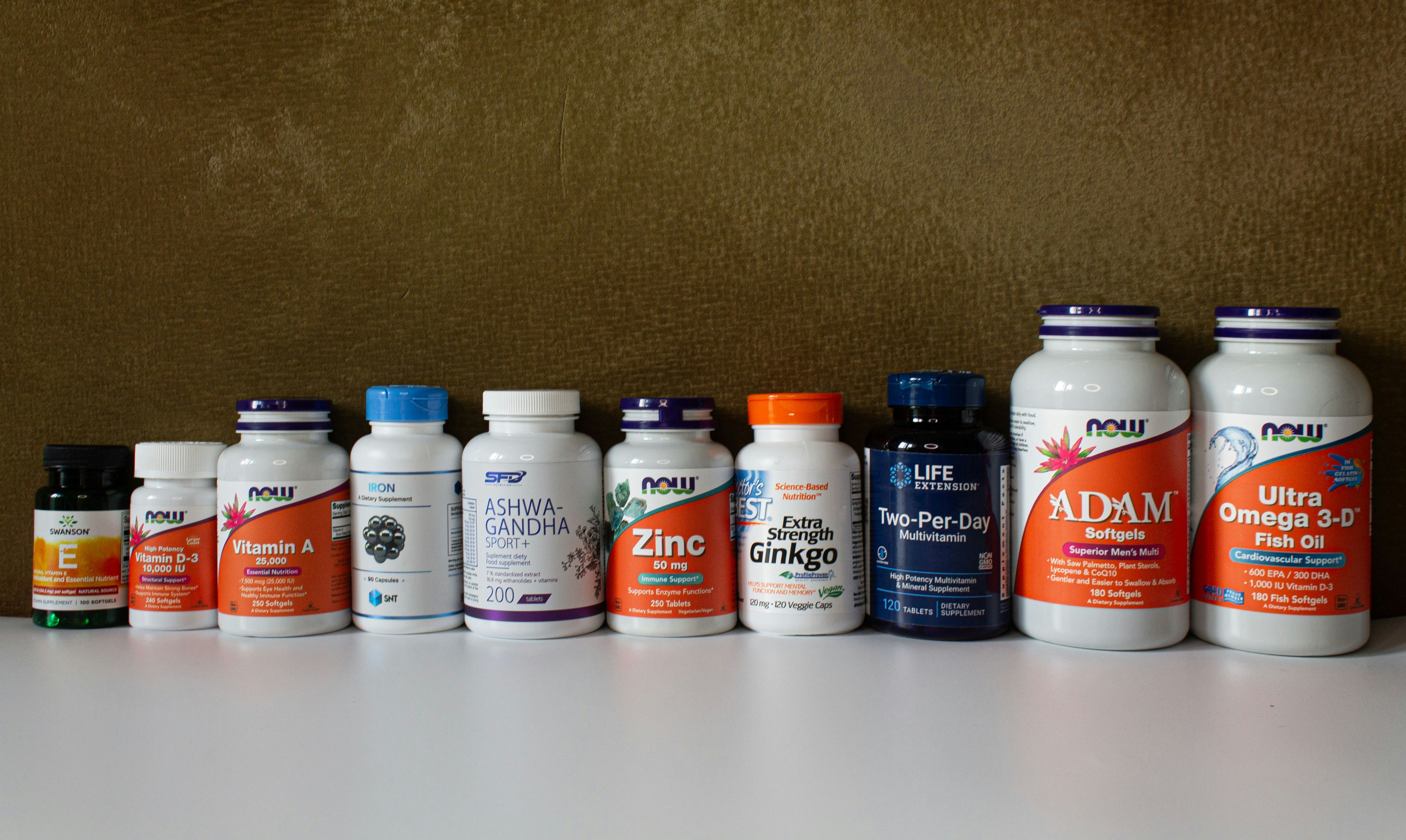

From the outside, a supplements brand on Shopify looks like any other product brand. Orders come in, a 3PL picks and packs, customers email when something goes wrong.
Underneath, the operation carries more. In the UK, food supplements are regulated as food. That means every unit has a batch and a date, every product page and support reply has to stay within the claims the law allows, and if a batch ever has a problem, you'll want to know quickly which customers received it.
None of this is difficult on its own. It goes wrong when it lives in one person's head, or when the 3PL, the support inbox and the product pages each follow slightly different rules. Here are the main pressure points, and what a well-run supplements operation does about each one.
This article is general information, not legal advice. For your own products, check the regulations and guidance linked at the end, or speak to a specialist.
1. Batches and best-before dates
Every unit you sell should be traceable to a batch, and every batch has a best-before date. That changes how stock has to be run.
- Pick by date, not by convenience. Stock should go out first-expiry, first-out (FEFO). First-in, first-out isn't enough: a newer delivery can carry an earlier date than stock already on the shelf. Many 3PLs also default to whatever is nearest the pick face, so ask yours to confirm in writing that it picks by expiry date for your SKUs.
- Track batches in the system, not on a spreadsheet. Your 3PL's system should record which batch went into which order. Ask for a stock report showing batch number and best-before date by location. If the system can't produce one, that is a question to ask before you sign.
- Watch short-dated stock early. Set a rule, such as reviewing anything with less than six months left, so slow sellers can be bundled, discounted or written off on purpose rather than discovered at a stock count.
- Receive properly. Every inbound delivery should be checked against the purchase order for batch numbers and dates, not just quantities.
2. Registration
A business that sells food, including food supplements, must register with its local council as a food business at least 28 days before it starts trading. That applies to online-only brands too. Registration is free and can't be refused. See the GOV.UK guidance on starting a food business.
Each business registers in its own right: your manufacturer's registration does not cover you, and neither does your 3PL's. Two operational points follow:
- Keep your registration current. If you change address or start doing something new, such as relabelling or repacking stock, check whether your registration needs updating.
- Ask your 3PL about theirs. A warehouse storing your supplements is handling food. Ask whether its site is registered as a food business and how it handles food products, such as temperature, pest control and segregation from non-food goods.
3. Claims: where the operation drifts
In Great Britain, a supplement can only make health claims that are authorised on the GB nutrition and health claims register, and it cannot claim to prevent, treat or cure a disease. The ASA's CAP Code, section 15 sets out the advertising rules. Two details are often missed: a general claim such as "supports wellbeing" is only allowed alongside a specific authorised claim, and each authorised claim comes with conditions of use, such as a minimum amount of the nutrient per daily dose.
Most brands get the label right, because the label is checked carefully once. The drift happens in everything written afterwards, often by people who were never briefed:
- Support replies. A well-meaning agent tells a customer the product "helps with anxiety" or "boosts immunity". That is a claim made by your business.
- Product pages and marketplace listings. Copy gets rewritten for a promotion, a new marketplace or an SEO push, and nobody checks it against the approved wording.
- Bundles and subscription emails. New bundles get new descriptions, written fast.
The fix is operational, not legal. Keep one approved claims list per product, signed off by whoever checks your compliance. Build support macros from it, brief everyone who writes copy, and check new listings against it, including the conditions of use, before they go live.
4. Traceability and recalls
If a batch turns out to be faulty, you need to act the same day. Food law requires businesses to keep records of who supplied them and which businesses they supplied, and to withdraw or recall unsafe food and notify the authorities. The FSA's guidance on food traceability sets out the steps.
One batch, traced end to end
The law requires you to know your suppliers. Recording the rest is what keeps a recall small.
Manufacturer
Batch number and certificate of analysis on file
Goods in
Batch and best-before checked against the purchase order
3PL stock
Batch and best-before recorded by location
Order
Batch recorded against each order picked
Customer
Names and orders for that batch, ready to contact
Where the chain can break (step 4): the 3PL ships the batch but doesn't log it per order.
THE TESTPick one batch. Can you list every customer who received it within an hour?
You're not legally required to track which customer received which batch when you sell directly to consumers. But without that record, a problem with one batch can mean contacting every customer who bought the product, or relying on a public notice, instead of only those affected. A well-run operation goes beyond the minimum and can answer three questions within an hour:
- Which batches are affected, and where is that stock now: at the 3PL, in transit, on Amazon?
- Which customers received those batches, with order numbers and contact details?
- Who does what: who stops sales, who contacts the 3PL and the manufacturer, who writes to customers, who notifies the authorities?
The brands that handle this well have practised it. Pick one batch, run the exercise once a year, and time it.
5. The supplier side
Many UK supplement brands use a contract manufacturer. That relationship needs more paperwork than a typical product supplier, and the paperwork is what protects you.
- A certificate of analysis for every batch. File it against the batch number before the stock is released for sale. If a customer or a marketplace asks, you can produce it in minutes.
- An agreed specification. Ingredients, amounts per daily dose, tolerances and packaging, signed off by both sides. Reorders should reference it, not "same as last time".
- Realistic lead times. Ingredient availability, production slots and testing all add time. Plan reorders from the date stock is released for sale, not the date production finishes.
- Minimum order quantities against shelf life. A large order at a lower unit price is no saving if part of it goes out of date before it sells. Before each reorder, work out how many months of sales the order covers and how much shelf life will be left when it arrives. Six months of stock with a twelve-month best-before leaves little room if sales slow.
6. Customer support
Supplement customers ask questions that other brands rarely get. Support needs clear rules for each:
- Health and medication questions. "Can I take this with my blood pressure tablets?" Support should never give medical advice. A standard reply points the customer to their GP or pharmacist and to the label, and never suggests a supplement can replace a prescribed treatment.
- Possible reactions. A customer who reports feeling unwell after taking a product needs a fast, defined route: record the batch number, escalate to a named person the same day, and keep a log. A pattern across one batch may be the first sign of a withdrawal.
- Allergens and ingredients. Allergenic ingredients must be emphasised every time they appear in the ingredients list, so support can always point to the label. Answers should come from the label and the approved specification, word for word, not from memory.
- Claims. Every macro is built from the approved claims list in section 3, so nobody improvises.
7. Subscriptions and repeat orders
Many supplement brands rely on subscriptions, and subscriptions make operational mistakes visible every month.
- Plan stock around renewals. Your subscription app knows how many orders are due next month. Feed that into reorder planning so a stockout never hits your most loyal customers first.
- Reserve stock for subscribers first. Before you plan a promotion or a wholesale order, take next month's subscription orders out of available stock. Otherwise a successful promotion can leave your subscribers without their delivery.
- Handle failed payments on a schedule. Retries, reminder emails and a clear pause or cancel rule, rather than ad hoc chasing.
- Make changes easy. Letting customers skip, swap or pause without emailing support gives them an alternative to cancelling and saves your team the tickets.
- Watch dates on long subscriptions. A customer on a three-month bundle needs stock with enough life left at the point of dispatch, not just at the point of sale. Decide in advance what happens if a batch won't cover the next cycle, or a formulation changes: pause, substitute or notify.
A quick check for your operation
If you run a supplements brand, these are worth checking this month:
- Our business, our 3PL's site and our manufacturer are each registered as food businesses
- Our 3PL picks first-expiry, first-out, records batch numbers per order and can report batch and best-before by location
- We review short-dated stock on a fixed schedule
- Every batch has a certificate of analysis on file before it goes on sale
- We have one approved claims list per product, and support macros and listings use it
- Support has a written route for health questions and possible reactions
- We could identify every customer who received a given batch within an hour
- Subscription renewals feed into our reorder planning and are reserved before any promotion
Free template: batch traceability for supplement brands A spreadsheet that joins your 3PL and Shopify exports, so you can look up every customer for a batch in minutes. Includes weekly checks and a mock recall log.
Download (Excel)If several of these are unclear, the problem usually isn't knowledge. It's that the work is spread across a founder, a 3PL, a support inbox and a manufacturer, with nobody holding it together. That is the kind of operation we run for founder-led brands. You can read how it works.
Sources
- Starting a food business (GOV.UK): registration 28 days before trading, free, covers online sellers and storage or distribution
- The Food Supplements (England) Regulations 2003, regulation 6: labelling requirements for food supplements
- CAP Code, section 15 (ASA): authorised health claims only, general claims need a specific authorised claim, no disease claims
- Food traceability for businesses (FSA, GOV.UK): traceability records, withdrawals and recalls
- Allergen labelling for food manufacturers (GOV.UK): allergens emphasised in the ingredients list
The Food Supplements Regulations linked above are England's. Scotland, Wales and Northern Ireland have their own equivalent regulations, and in Scotland food safety guidance comes from Food Standards Scotland. Health claims in Northern Ireland follow the EU register rather than the GB one.